What Can the Unborn Child Feel and Perceive?
- Studies confirm that before birth (prenatally), the unborn child undergoes remarkable development. The first sensory impressions and learning experiences already take place in the womb and can influence life after birth.
- The topic of pain perception is viewed from different perspectives and is discussed controversially.
From fertilization to birth, the baby goes through various stages of development: As early as weeks 5/6 of pregnancy, the embryo’s cardiovascular system develops and the nervous system begins to form. The heartbeat can be seen on ultrasound from week 6 onward. In weeks 7/8, facial features become more defined, movements are detectable, and the brain develops. By day 40, both hemispheres of the brain can be identified and grow at a rate of 100,000 nerve cells per minute. From day 44, electrical brain activity can be measured. By week 8 of pregnancy, all organs are present, the spinal cord has formed, the brain processes its first impulses, and neural pathways connect.
It is therefore plausible that in the following stages of development, various stimuli can be perceived. It is known, for example, that both the mother’s positive emotions and stress can affect the unborn child. Babies in the womb also respond strongly to the mother’s voice, which they are able to perceive.
Some researchers assume that the ability to feel pain begins only around week 24 of pregnancy. Stuart Derbyshire, for example, argued that pain perception requires reason and consciousness, which would develop only after birth.¹ ²
However, in a later study (“Reconsidering Fetal Pain,” 2020), he revised his view and suggested that pain perception, independent of reason and consciousness, may already be present at an earlier stage.³
Other researchers consider that, due to the early development of the central nervous system, sensations such as pain could already occur in the corresponding early weeks of pregnancy.
For this reason, the American Society of Anesthesiologists and the North American Fetal Therapy Network recommend that babies in the womb receive pain-relieving medication during invasive procedures.⁴
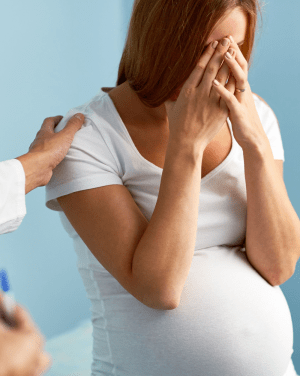
- Don’t worry — If you are experiencing significant emotional stress or physical strain, this does not automatically mean it will affect your baby’s development. Nevertheless, it may be helpful to reduce stressful factors and seek advice and support.
💬 Support near me
🗓 Pregnancy week calculator – which week am I in and what is happening right now?
ℹ️ More information: Course of a pregnancy
Abortion Pros & Cons Self-Test
Abortion pros and cons: Which arguments are currently on your mind and in your heart? You can find decision aids and further reflections here in the self-test! You will receive the evaluation directly on your screen.
We are here for you!
Pro Femina is based on the core principles of empathy, respect, and trust.