

"I Would Have Preferred a Boy / Preferred a Girl"
Gender disappointment is a feeling of sadness and disappointment about the baby’s gender. It is a very sensitive topic, and many people don’t dare to talk about it.
The reasons and causes for this can be varied. They are often linked to one’s own life story, ideas about gender roles, or simply personal wishes.
Are you afraid that your baby won’t match your or your partner’s preferred gender? Or have you already found out your baby’s gender and now feel disappointed? Here you can find support and help!
Am I Suffering From Gender Disappointment?
Many parents are equally happy about having a boy or a girl. Some can hardly wait to find out the news during the ultrasound, or only at the birth. Others organise “gender reveal parties” to share the surprise with family and friends: Pink confetti means it’s a girl, blue confetti stands for a boy – and everyone is delighted, no matter what colour fills the air.
Just as often, though, an expectant mother or father may hope for a particular gender for their baby. Having a preferred gender is not a bad thing to begin with, and is a natural feeling. Often, it is about your own experience: For example, a partner may want a boy because he thinks, “I have no idea how to deal with a girl.” Or the expectant mother doesn’t see herself as a “boy mum”, simply because she has more experience with girls. Or you are already organised for one gender because of older siblings (clothing, etc.). On the other hand, after your first children, you might wish for a different gender for a change.
These are all understandable and reasonable reasons for having a preferred gender. In most cases, though, you come to terms quite quickly if things turn out differently than you wished.
However, if you notice unusually strong negative feelings, if your thoughts constantly revolve around the baby’s gender, or if you feel a large sense of disappointment, you might wonder whether you are suffering from gender disappointment. These thoughts and phrases might seem familiar:
"Ever since I found out the gender, I can’t really look forward to our child any more..."
"My partner is really disappointed because he / she actually wanted a boy / girl."
"Everyone gets girls, except me."
"A boy instead of a girl, I feel sad."
"I’m afraid of having another girl. I just want a boy for once."
"I don’t want a girl – I never wanted to be one myself."
...
If these or similar thoughts are always on your mind, it can help to look a little deeper and honestly ask yourself where these thoughts might be coming from. There’s no need for shame!
It is entirely understandable that such feelings can be a burden. Maybe you also have a real fear that you won’t be able to accept or love your baby in the way you wish, or as you love your other children, if you are already a mother.
These thoughts and feelings may be linked to your personal history or to your current situation. This may also give you the opportunity to process or to reconcile something that is the true underlying issue. This may take a little courage, but it can be worthwhile to pursue it. We are here by your side!
Where Does the Disappointment Come From?
Disappointment about your child’s gender can have many different causes.
In some cultures, boys are valued more highly and women are treated less equally. Sometimes, a partner explicitly wants a male successor to follow in their own footsteps. But it can also be the other way round.
Or there may be expectations from others placed on you and your partner. For example, if your family or your circle react directly and insensitively: “After two girls, it really ought to be a boy this time.” Or: “Another boy?” – Comments like this can create pressure and leave expectant parents feeling that there is no genuine joy about the baby, and that they can’t please anyone. In these cases, the disappointment often relates to other people’s reactions.
Very often, your own life story and experiences play a more important role. You could take some time to consider the following:
- How did you grow up yourself? What is your relationship with your own parents? Do you have siblings? What was family life like for you as a child, and how is it now?
- What experiences have you had as a girl or woman? Was life easy, or did you often have to fight for your place?
- Do you like being a woman? And how would you describe yourself – more typically female, or do you have qualities that are often seen as more “male”?
- What experiences have you had with men? How do you see the other gender?
- What are your ideas of being a mother? What hopes and plans do you have for your life and for your child?
- Who are your role models? What would you like to pass on to your child? And what do you want to do differently for your child?
These questions can help you to better understand your feelings and to find out why you want your baby to be a particular gender so much. Interestingly, women who have had similar experiences in the past (for example, being treated disrespectfully by men) sometimes come to completely different conclusions. One woman might want a boy because she feels girls have it harder in life. Another might draw the opposite conclusion and worry that a boy could grow up to be the kind of man who doesn’t treat women well – and so she would prefer a girl.
Each situation is unique, and the feelings that go with it can be complex and multi-layered.
We invite you to take a closer look at three questions, and give yourself a moment just for you:
-
The way you view your own womanhood can be influenced by many different factors. Perhaps you have experienced that you had to do more than a man to gain recognition for your achievements – and you found that unfair? Or maybe you never really felt like a “typical girl”, for example, you preferred playing outside to drawing and crafting. Do you enjoy being friends with women, perhaps even see them as allies, or do you often find them exhausting?
In the same way, you may have certain expectations or even worries about your role as a mother. Alongside your own thoughts, there can also be pressure from outside. Perhaps you feel that others have specific ideas about how you or your child should be? All of this can be unsettling and lead to many questions.
How Do You Want to Live as a Woman and a Mother? What Would You Like to Pass On to Your Child?
You have so many possibilities and the freedom to live in a way that suits your personality! Discover what your personal path might look like, so you can be at peace with yourself!
👥 Take the Personality Test for Pregnant Women and Mothers Here!
-
Perhaps you have positive experiences that have shaped your view of men, or you may also have faced challenges.
Have you experienced men as supportive and respectful, or have there been situations in which you felt misunderstood or treated unfairly? Perhaps you have also been hurt...
It is worthwhile to reflect on the beliefs you have internalised about men and how these have developed in your life. What are the positive things you would like to continue to pursue in your life, and in which areas is healing still needed?
This reflection can help you to understand your own attitudes and expectations – also with regard to your baby.
-
Perhaps the topic of self-acceptance is particularly important for you at the moment. It may be that certain experiences or events make it difficult for you to accept yourself. Sometimes there is no obvious reason, yet you still find it hard to like yourself with all your different facets.
Perhaps you also tend to be a perfectionist. Do you set yourself high standards and often only focus on what doesn’t go well straight away? Do you feel as if you can’t please anyone or be loved?
You have wonderful strengths within you, and you are good just the way you are!
Now might be your opportunity and your task to discover these strengths, to find joy in yourself, and to truly feel at home in your own heart. Allow yourself to love and accept yourself!
Tips for You and Real Help ❤️
Perhaps You Don’t Really Dare to Speak Openly About Your Thoughts and Feelings with Someone.
Tip 1: Have the Courage to Make Peace with Your Past!
On the one hand, it can be important to recognise how your past has shaped you and why you might have a preference for a boy or a girl. On the other hand, it may be helpful to make peace with your past, as best you can for now, and look ahead to your opportunities: What matters most to you? Which values would you like to pass on to your child? How would you wish your child to grow up?
Use your experiences to bring positivity into your life and into your child’s life!
As Amy puts it: “I wish for my child – regardless of their gender – to be guided by values such as loyalty, understanding, consideration, honesty, and a joy in life. I want my child to understand the importance of protecting those who are vulnerable and standing up for their beliefs.”
Tip 2: Have the Courage to Broaden Your Ideas of What It Means to Be a Man or a Woman!
It’s true that there are qualities and behaviours that are considered more typically male or female. However, sometimes such notions can lead to rigid stereotypes and narrow our perspective. For example, people often assume that boys are always loud and wild, while girls are quieter – or perhaps sometimes more vain or moody. Or it’s expected that men are always strong, while women must always be caring. But men can be just as sensitive, and women can be strong and independent, especially in challenging situations.
Nor does anyone have to become exactly like their father or exactly like their mother. Everyone, despite certain influences, can develop into a completely unique and new person. Perhaps you've already noticed this in yourself?
It is worthwhile to consciously open yourself to these new perspectives. Who knows, some pleasant surprises may emerge? In any case, it can be helpful to develop greater appreciation and a more positive view towards the gender you are currently struggling with.
Tip 3: Have the Courage to Trust Your Mother’s Heart!
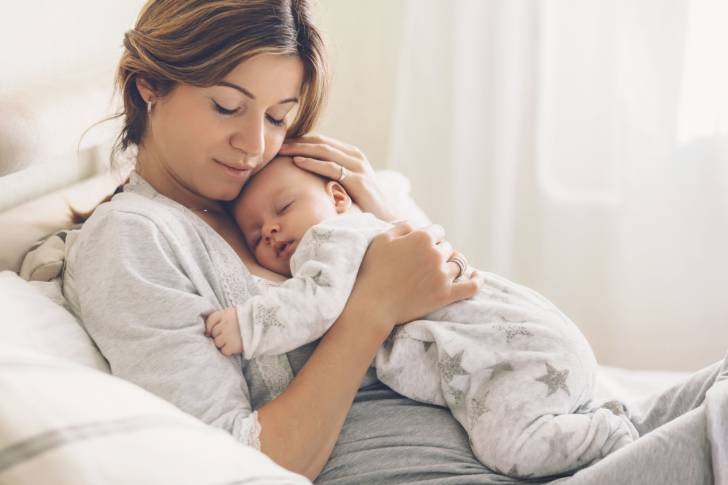 1531703300 | Alena Ozerova | shutterstock.com
As a mother, the first thing you should realise is that your baby is your baby – a little person who needs you and loves you unconditionally!
Your child is so much more than just their gender. They will have their own unique personality. They will have both masculine and feminine qualities – their own special and valuable mix. You have the opportunity to get to know this little new life, step by step. You can grow together with your child and open your heart more and more. You have the ability to shape which values you pass on and how you wish to bring them up.
Many women say that any disappointment about the baby’s gender simply vanished at birth, because they were then able to look at their little one with love.
If you still feel upset about your baby’s gender after the birth, there are sources of help and support available! Sometimes, hormonal changes after giving birth can intensify or bring certain emotions to the surface for a while. You may also have received a diagnosis of postnatal depression.
Contact your midwife or gynaecologist. They can provide support and, if needed, refer you to appropriate counselling services. You are not alone with your concerns.
Women regularly turn to counselling with this concern and worry. For example:
My Partner Wants a Different Gender for Our Baby
Fathers can also experience gender disappointment. If this is the case for you: Are you able to talk openly with your partner about it? Can he express his feelings and perhaps – as described above – take some quiet, honest time to consider where his particular wish comes from?
It’s important not to judge his feelings, but to give him space for them. At the same time, it’s perfectly all right for you to tell him that his reaction makes you feel unsettled and sad. Both of your feelings are important and deserve attention.
Perhaps it helps to talk together about your expectations and hopes connected to your child’s gender. Often, such wishes are deeply linked to personal experiences, expectations or cultural ideas. By sharing these openly, you can develop a deeper understanding of each other and together create a loving foundation for your future as parents. By working together to understand your feelings, you can become stronger as a couple and as future parents. Your relationship and your bond with your baby can only benefit from this.
Facts and Interesting Information:
- The baby’s gender is usually revealed during the second major routine ultrasound between the 19th and 22nd week of pregnancy.
- In some cases, however, the gender can be identified earlier, from about the 14th week, if the baby’s position and the quality of the scan allow for it – or through prenatal diagnostics. The information at this stage, however, may still be uncertain.
- In many countries, including Germany, there are laws that prohibit revealing the gender too early in order to prevent gender-based abortions. For this reason, in Germany the gender cannot be disclosed before the 14th week of pregnancy.
- During pregnancy, things like the shape of the bump, the baby’s heart rate, or particular food cravings do not provide reliable clues about whether it will be a girl or a boy. There are various old wives’ tales and myths, but none of these offer scientifically proven or reliable predictions about the baby’s gender!
Are you feeling uncertain and considering abortion because you were hoping for a different gender for your baby? Or is your partner putting pressure on you?
Please don’t keep your worries and thoughts to yourself – talk to someone about them! We are also here for you if you wish!
⚖️ Should I Have an Abortion: Yes or No? – Take the Abortion Test
🧔🏻♂️ What If He Doesn’t Want the Baby? – Take the Self-Test
❤️ Decision-Coaching: Should I Have an Abortion? 7 Days of Support by Email, with Daily Reflections and Real Stories from Women