

“I Wish I Were Having a Boy / a Girl.”
Gender disappointment is a feeling of sadness and disappointment about your baby's gender. It is a very sensitive topic, and many people are reluctant to talk about it.
The reasons and causes for this feeling can be varied. Often, they are connected to your own life experiences, ideas about gender roles, or simply personal wishes.
Are you worried that your baby won't match your or your partner’s desired gender? Or have you already learned your baby's gender and are now disappointed? Here you’ll find support and help!
Am I Experiencing Gender Disappointment?
Many parents are equally happy about having a boy or a girl. Some can hardly wait to find out during the ultrasound scan or even wait until the birth. Others throw “gender reveal parties” to share the surprise with family and friends: Pink confetti means it’s a girl, blue confetti means it’s a boy – and everyone celebrates, no matter which color fills the air.
But sometimes, an expectant mother or father wishes for a certain sex for their baby. Having a preferred gender is not a bad thing and is a natural feeling. Often, it simply comes down to personal experiences: For example, a partner might wish for a boy because he thinks, “I have no idea how to handle a girl.” Or the mother-to-be doesn’t see herself as a “boy mom,” just because she has more experience with girls. Or perhaps, for practical reasons, like already having older siblings and clothes, you may already be set up for a certain gender. On the other hand, after having children of one gender, you might simply hope for a change with the next baby.
All these are understandable and common reasons for having a preferred gender. Most of the time, parents quickly come to terms with things turning out differently than expected.
However, if you notice exceptionally strong negative feelings, if your thoughts constantly revolve around your baby’s gender, or you feel deeply disappointed, you may be wondering if you are experiencing gender disappointment. These thoughts and feelings might sound familiar:
“Ever since I found out the gender, I don’t really feel excited about our baby anymore…”
“My partner is completely disappointed because he really wanted a boy/girl.”
“It seems like everyone is having a girl, except me.”
“A boy instead of a girl—I feel sad.”
“I’m afraid of having another girl. I just want a boy this time.”
“I don’t want to have a girl—I never wanted to be one myself.”
…
If these or similar thoughts keep coming up for you, it might be helpful to take a closer look and honestly ask yourself where these feelings come from. You don’t have to feel ashamed!
It’s also completely understandable that such feelings can be a burden. Maybe you have a strong fear that you might not be able to accept or love your baby, the way you wish to or the way you love your other children if you’re already a mother.
These feelings might be tied to your personal story or your current situation. And maybe there is a chance for you to reflect and make peace with something deeper that’s really behind these emotions. It might take some courage, but it can be worth exploring these feelings. We are here to support you!
Where Does This Disappointment Come From?
Disappointment about your baby’s gender can have a variety of causes.
In some cultures, boys are valued more highly and women are not treated equally. A partner may specifically want a male heir to follow in his footsteps. Of course, it can also be the other way around.
Or, expectations from others might be placed on you and your partner. For example, when family or friends react thoughtlessly: “After two girls, maybe it’s time for a boy,” or: “Another boy?”—Comments like these can create pressure, making expectant parents feel like no one is truly happy for them or that no matter what, they can’t please anyone. So, a lot of the disappointment is actually linked to the reactions of others.
Often, personal history and experience play a major role. Here are some things you might want to consider:
- What was your own upbringing like? How is your relationship with your parents? Do you have siblings? How did you experience family life in your childhood, and how do you see it today?
- What experiences have you had as a girl or woman? Did things come easily for you, or did you often have to fight for your place?
- Are you happy being a woman? How would you describe yourself – more traditionally feminine, or do you also identify with traits that are considered more “masculine”?
- What experiences have you had with men? How do you view the opposite sex?
- What are your hopes for motherhood? What wishes and plans do you have for your life and for your child?
- Who are your role models? What would you like to pass on to your child? And what do you hope will be different for them?
Reflecting on these questions can help you understand your feelings better, and discover why you may be longing for a particular gender for your child.
Interestingly, women with similar past experiences—like having been treated disrespectfully by men—can reach very different conclusions. One woman might want a boy, believing life is harder for girls. Another might hope for a girl out of fear that a son could grow up to mistreat women.
Every situation is unique and the feelings that come with it can be very nuanced and complex.
We encourage you to take a look at these three questions and give yourself a moment just for you:
-
The way you view your own womanhood can be influenced by many different factors. Maybe you’ve experienced that you had to work harder for recognition than a man did—and that felt unfair to you? Or perhaps you never felt like a “typical girl,” and preferred playing outside over drawing or doing crafts. Do you enjoy friendships with other women, maybe even see them as allies, or do you often find it challenging to get along with women?
You might also have certain expectations or even worries about your role as a mother. Alongside your own thoughts, you can also feel pressure from others. Maybe you sense that people around you have particular ideas about how you or your child should be. All this can be unsettling and lead to lots of questions.
How do you want to live as a woman and a mother? What values would you like to pass on to your child?
You have so many possibilities and the freedom to live in a way that truly fits your personality! Explore what your own path could look like, so you can feel at peace with yourself!
-
Maybe you’ve had positive experiences that have shaped your view of men, or perhaps you’ve also faced challenges.
Have you experienced men as supportive and respectful, or have there been times when you felt misunderstood or treated unfairly? Maybe you’ve even been hurt by a man…
It’s worthwhile to reflect on the beliefs you’ve internalized about men and how these views have developed throughout your life. What are the positive things you’d like to carry forward, and where is there still a need for healing?
Taking time for this kind of self-reflection can help you understand your own attitudes and expectations—including those you may have for your baby.
-
Maybe the topic of self-acceptance is especially important for you right now. It could be that certain experiences or events are making it difficult for you to accept yourself. Sometimes there isn’t an obvious reason, but you may still find it hard to like all aspects of yourself.
Maybe you also tend to be a perfectionist. Do you set high standards for yourself and often only focus on what doesn’t go right? Do you feel like you can never please anyone or that you aren’t loved?
You have wonderful strengths within you, and you are great just the way you are!
Right now, it might be your task and your opportunity to discover these strengths, to find joy in yourself, and to truly feel at home in your own heart. Allow yourself to love and accept yourself!
Tips for You and Real Help ❤️
Maybe you don’t really feel comfortable talking openly about your thoughts and feelings with someone.
Tip 1: Have the Courage to Make Peace with Your Past!
For one, it can be important to recognize how your past has shaped you and why you might wish for a boy or a girl. On the other hand, it may help to make peace with your past as best you can now, and look forward to your possibilities: What is important to you? What values do you want to pass on to your child? How do you hope your child will grow up?
Use your experiences to bring positivity into your life and your child’s life!
As Amy puts it: "I wish for my child—regardless of gender—to grow up with values like loyalty, understanding, consideration, honesty, and a joy for life. I want my child to understand how important it is to protect those who are vulnerable and to stand up for what they believe in.”
Tip 2: Have the Courage to Expand Your Ideas About What It Means to Be a Man or a Woman!
It’s true that there are traits and behaviors that are seen as more typically male or female. But sometimes these ideas can turn into rigid stereotypes that limit our perspective. For example, people often assume boys are always loud and wild, while girls are quieter—or maybe even more vain or moody. Or there's the expectation that men must always be strong, while women are supposed to be caring. But men can be just as sensitive, and women can be strong and independent in challenging situations.
No one needs to become exactly like their father or mother. Everyone can grow into a unique and new person, no matter their upbringing or influences. Maybe you’ve even noticed this in yourself.
It’s worth it to intentionally open up to these new perspectives. Who knows, you might even be pleasantly surprised! In any case, it can be helpful to develop more appreciation and a positive outlook towards the gender you might currently be struggling with.
Tip 3: Have the Courage to Trust Your Mother’s Heart!
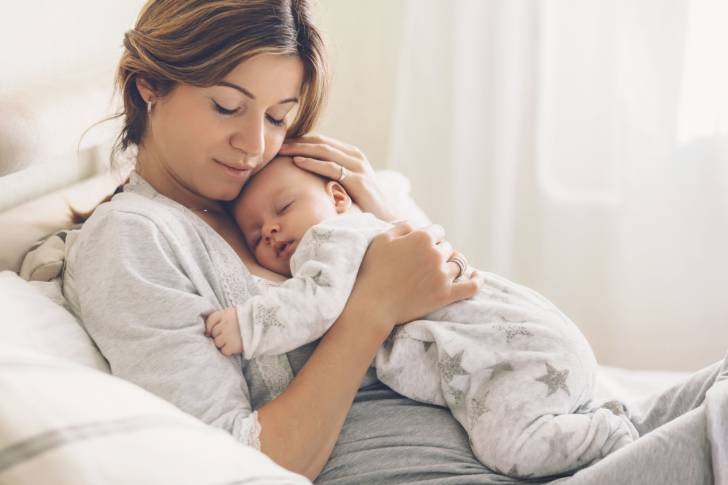 1531703300 | Alena Ozerova | shutterstock.com
As a mother, the most important thing to remember is that your baby is your baby—a little human being who needs you and loves you unconditionally!
Your child is so much more than just their gender. They will have their own unique personality. They’ll have both masculine and feminine traits—a special and valuable mix that's all their own. You get to get to know this little new life, step by step. You’ll grow with them and open your heart wider. It’s in your hands to decide what values you want to pass on to them and how you want to raise them.
Many women say that the disappointment about their baby’s gender simply disappeared at birth, because they were able to look at their little one with nothing but love.
If you still find it hard to accept your baby’s gender after birth, please know that you’re not alone and there’s help and support available! Sometimes, hormonal changes after delivery may temporarily intensify or bring out certain emotions. You may also be experiencing postpartum depression.
Consider contacting your obstetrician-gynecologist (OB-GYN), midwife, or another healthcare provider. They can offer support and, if appropriate, refer you to counseling or mental health services. You are not alone in these concerns.
Women regularly seek counseling for similar feelings and worries. For example:
My Partner Wants a Different Gender for Our Baby
Fathers can also experience gender disappointment. If that's the case for you: Are you able to talk openly with your partner about it? Can he express his feelings and, as described above, take some time to honestly reflect on where his preference comes from?
It's important not to judge his feelings, but to give him space to express them. At the same time, it’s completely okay for you to tell him that his reaction confuses and saddens you. Both of your feelings are important and deserve to be acknowledged.
Maybe it will help to talk together about the hopes and expectations you both have regarding your baby’s gender. Often, these wishes are tied to personal experiences, expectations, or social ideas. By sharing openly, you can develop a deeper understanding of each other and create a loving foundation for your future as parents. By working together to understand your feelings, you can grow stronger as a couple and as future parents. Your relationship and your bond with your baby will only benefit from this.
Facts and Interesting Information:
- The baby’s gender is usually revealed during the second major ultrasound between the 19th and 22nd week of pregnancy.
- In some cases, the gender can be detected earlier—around the 14th week—if the baby’s position and the quality of the ultrasound allow, or through prenatal diagnostics. However, this information can still be uncertain at that stage.
- In many countries, including Germany, there are laws that prohibit sharing the gender too early in order to prevent gender-based abortions. In Germany, for example, the gender cannot be shared before the 14th week of pregnancy.
- During pregnancy, things like the shape of your belly, the baby’s heart rate, or certain cravings are not reliable indicators of whether you’re having a girl or a boy. There are many old wives’ tales and myths, but none of these provide scientifically reliable information about your baby’s gender!
Are you feeling unsure and considering an abortion because you wanted a baby of a different gender? Or is your partner pressuring you?
Don’t deal with your thoughts and worries alone—talk to someone you trust! We’re also here for you if you need someone to listen.
⚖️ Should I have an abortion: yes or no? – Take the abortion self-test
🧔🏻♂️ What if he doesn’t want the baby? – Take the self-assessment
❤️ Decision coaching: Should I have an abortion? 7 days of email support, with daily prompts and stories from other women.