
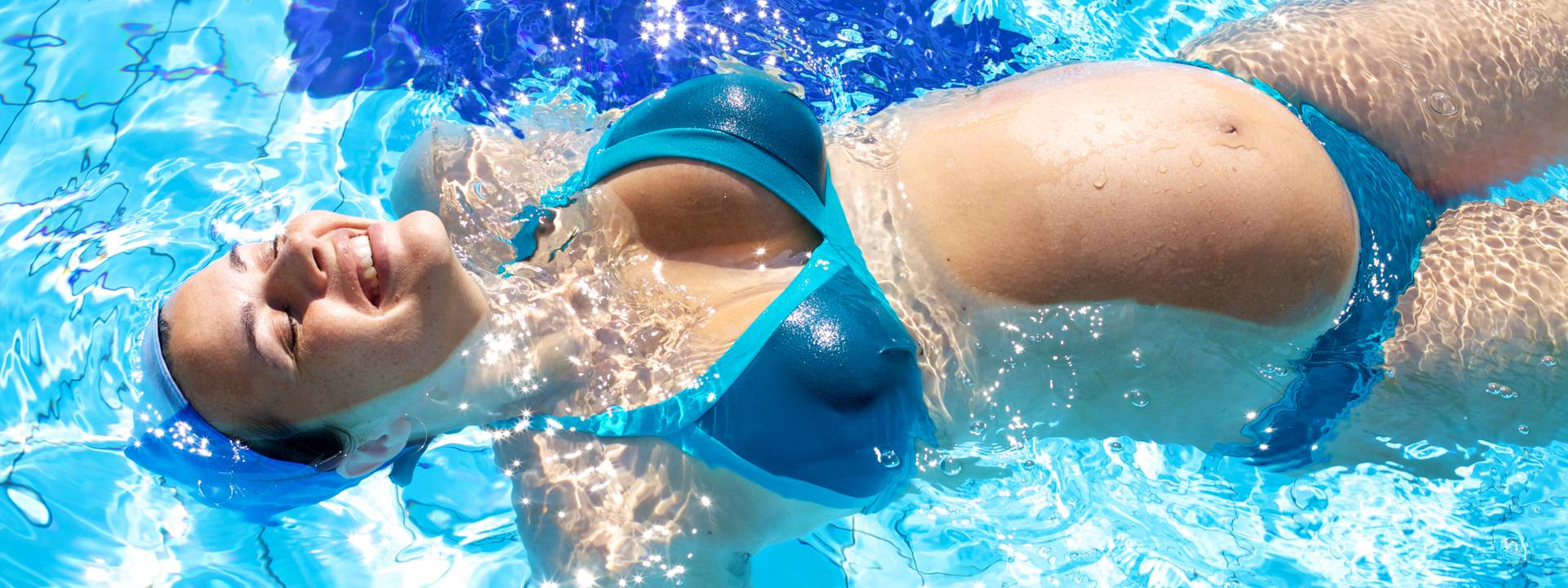
Why Swimming Is the Ideal Sport for Pregnant Women:
- Some sports are less suitable during pregnancy, for example due to an increased risk of injury.
- Swimming, on the other hand, is relatively safe: moving weightlessly in the water can even be a great feel-good factor during pregnancy.
- If you keep a few things in mind when going to the pool, there is nothing standing in the way of swimming during pregnancy.
👥 Pregnant – what type am I? – Take the personality test
🤰🏻 Still unsure whether you are pregnant? – Take the online pregnancy test
What Other Sports Are Still “Allowed”?
You are pregnant and probably want to make sure you don’t do anything that could harm your baby. That’s why you may be reviewing your daily routine and asking yourself: “Can I still eat this?”, “Can I still do this?” or “What effect might this have on my baby?”
These concerns also apply to the topic of sports. If you used to climb mountains without a second thought, jog around the park every day, or play handball, you may now be wondering: Is this or that sport still good for me?
In principle, exercise during pregnancy is good for the body — but some sports are unfortunately less suitable for pregnant women.
- More on this topic: Exercise during pregnancy
Swimming = Good All Around
However, one sport is especially appreciated by many pregnant women: swimming. A visit to the pool is gentle, perfectly suited to your changing body — and at the same time a sport that helps you stay fit during pregnancy, challenge yourself (in moderation), and improve your overall well-being.
Benefits: Why Is Swimming Especially Good During Pregnancy?
Swimming offers a whole range of advantages:
Full-Body Workout With Balanced Strengthening
Swimming is a very healthy sport in general — for everyone. It engages the whole body, strengthens the immune system, and avoids sudden peaks of strain that could be stressful for the heart.
Weightless Floating
During pregnancy, there is an additional benefit: In the water, you feel almost weightless. The weight of the day, the pressure of standing and walking, falls away — you float.
Especially later in pregnancy, when your belly grows, your feet swell, or your back may hurt, swimming provides relief that benefits your entire body. It can ease common pregnancy discomforts such as heavy legs or strained spinal discs and can also have a positive effect on your mood.
Low Risk of Injury
The risk of injury while swimming is very low. The water cushions and protects you as a mother — just as your baby is protected by the amniotic fluid in the womb.
Suitable for Experienced Swimmers and Beginners Alike
Perhaps you already swim regularly — in that case, you can of course continue your usual routine. If your normal level of activity suddenly feels more exhausting than before, that is completely normal, and you can safely lower your expectations of yourself a little. After pregnancy, there will be time again to train more intensively if you wish.
You might also be interested in special classes for pregnant women, which are offered at many swimming pools: relaxed swimming, floating, or water aerobics gently keep your body fit.
Even if you have not been much of a swimmer before, pregnancy could be the perfect time to give swimming a try as a gentle form of exercise. Especially at the beginning, ten to fifteen minutes per visit are enough to experience the benefits. During pregnancy, swimming should not cause stress or overexertion — it should gently challenge your body.
Even if you cannot swim, you don’t have to avoid the pool: simple movements in the weightlessness of the water — even in the shallow end — can be soothing for you and your baby. Light exercises, treading water, or simply splashing around can improve fitness and well-being.
What You Should Keep in Mind When Swimming During Pregnancy
In general, it is wise to ask your gynecologist for their assessment of whether swimming is right for you. If there are no medical concerns and your pregnancy is uncomplicated, you can treat yourself to a new maternity swimsuit. It is helpful if it offers enough stretch around the belly — you might also feel more comfortable in a bikini.

When swimming during pregnancy, you should also keep the following in mind:
- Although the fear of infections at swimming pools is relatively unfounded today due to modern pool hygiene standards and daily water testing, it is better to avoid hot tubs because of the heat and the potentially higher concentration of germs.
- To minimize the risk of a bladder infection, it is advisable to change quickly after swimming and not walk around in wet clothing for a longer period of time.
- And as mentioned before, you may allow yourself a little less ambition during these special months. The movement will definitely do you (and your baby) good.
When swimming during pregnancy, the main goal is to gently challenge yourself in the soothing element of water and to enjoy the feeling of weightlessness. Seen this way, swimming is the perfect sport during pregnancy — both for you as a mother and for your child.
Are You Interested in Other Topics, or Is There a Concern That Won’t Leave Your Mind?
With pregnancy, many things change overnight. Your perspective shifts completely. Perhaps you even feel a little restricted or limited right now — especially if the pregnancy was unplanned. It takes time for a woman to adjust internally to such a change. Just as every pregnancy is different, your questions and worries — as well as your confidence and hope — are allowed to have space. You are free to follow your own path and discover what feels right for you. We are happy to accompany you along the way!
Here you will find a selection of self-tests you can take:
- 💪 What strengths do I have? – Take the strengths test
- 🧑⚕️ (Possibly) pregnant: When should I see a gynecologist?
- 🧔🏻♂️ What if he doesn’t want the baby?
- 🙎♀️ Young and pregnant: What are my options?
- 💻 Pregnant at work: What do I need to consider?